Backhoe Loader

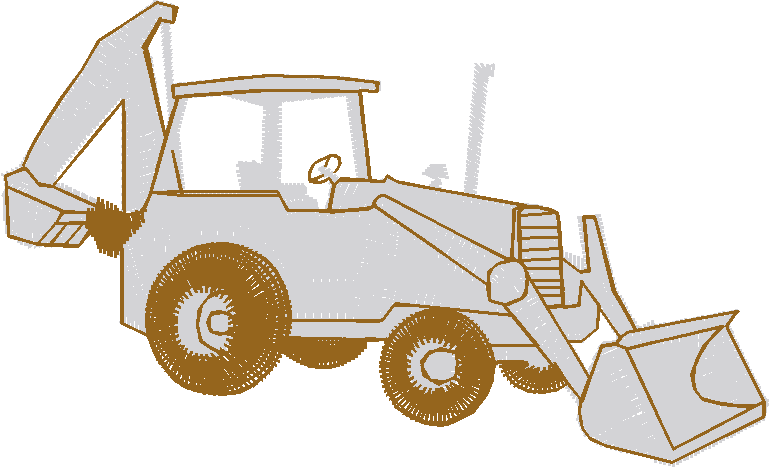
Backhoe Loader is a free machine embroidery design digitized at 76.7 × 46.5 mm with 7,672 stitches in 2 thread colors. Expect roughly 13 minutes of stitch-out time on a home machine. Download it below in DST format, ready to transfer to your machine.
Pattern Details
- Craft
- Machine Embroidery
- Colors
- 2
- Stitches
- 7,672
- Design Size
- 76.7 × 46.5 mm
- Recommended Hoop
- 4" × 4" (100 × 100 mm)
- Est. Stitch-Out Time
- ~13 min
- Color Changes
- 1
- Trims
- 2
- Difficulty
- Intermediate
Download Files
Free for personal stitching. Need another format (DST, JEF, EXP…)? More formats are on the way. Design License →
Stitching Color Sequence
Thread order as programmed in the file — follow along at your machine. This file format doesn't store thread colors — the colors shown are a suggested palette. Swap in any threads you like.
| # | Thread | Stitches |
|---|---|---|
| 1 | 415 · Pearl Gray | 5,616 |
| 2 | 780 · Ultra Very Dark Topaz | 2,045 |
About This Design
This backhoe loader design stitches out at 76.7 × 46.5 mm (3.0 × 1.8 in) and uses 2 thread colors across 1 color change. Total count is 7,672 stitches at a density of about 215.1 stitches/cm².
At The Machine
- Estimated stitch-out time: ~13 minutes at 600 spm
- Color changes: 1, automatic trims: 2
- Follow the color sequence table above — thread numbers refer to the chart programmed in the file; match them to your brand by color.
Fabric & Hooping
At about 215.1 stitches/cm² this is a dense fill that pulls hard on the fabric. Back it with firm cut-away, add a water-soluble topping on towelling or fleece, and pick a stable woven over anything stretchy. At 76.7 × 46.5 mm a 4×4 in hoop is plenty.
Thread Colors in This Design
DST files store stitch data but no thread information, so the colors below are our suggested DMC match. Swap in whatever you have in a similar shade:
- 415 Pearl Gray
- 780 Ultra Very Dark Topaz
Stitching Notes
With 2 colors and 1 changes you can pre-wind the whole set before you start and never leave the machine. DST stores stitch data only, which is why the color list is a suggestion rather than the digitizer's original choice.
What to Make With It
A picture-style design wants a flat, stable surface where it can be seen whole: a framed hoop piece, a quilt centre, a cushion front or the back of a jacket. Avoid stretchy garments, which distort the shape.